
Case Study: Fainting, Panic and Tony Soprano
Introduction
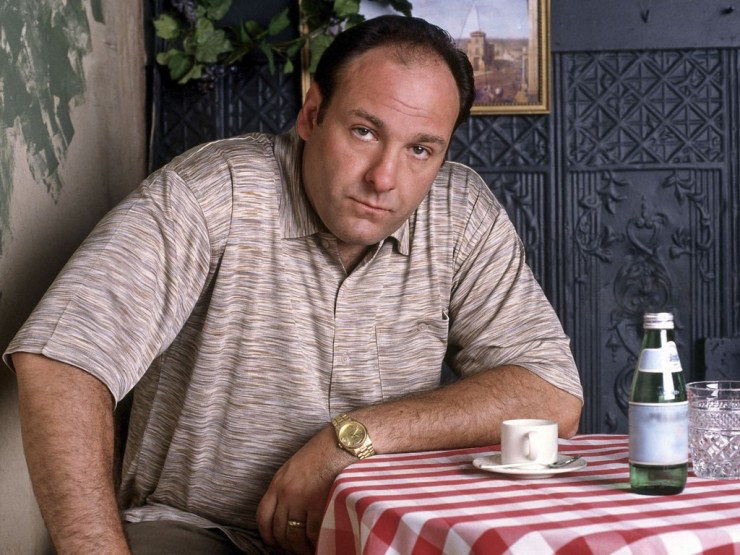
The Sopranos aired on HBO from 1999 to 2007. It was a financial and critical success and also has been the topic of many psychological reviews and essays. The initial conceit of the show is - what would happen if an organzied crime leader - Tony Soprano - had mental health issues and went to psychotherapy. Of course there was considerably more to the show that this, but the show starts with this conceit in its very first scene. Tony is in the waiting room of his psychiatrist. What would bring such a character to therapy? What kinds of triggering experiences?
Anxiety and Panic in Movie Mobsters
The idea of of a mobster struggling with anxieties and panic was a newer trope in the late 90’s. “Analyze This” was a comedy with Robert DiNero as a mobster going to therapy for anxiety and panic with psychologist Billy Crystal. The idea of a tough guy going to therapy was surprising. It was funny to play with the movie trope of the macho gangster.
Psychologist: “Tell me how you feel about that”
Mobster: “Fuh get about it!”
In The Sopranos, our main character, Tony goes to therapy for what seems to be panic attacks, although he himself can’t quite see this. He approaches his neighbor, Bruce Cusimano, an internal medicine doctor for guidance and Cusimano suggests to a confused Tony that he go see a psychiatrist colleague. Tony obliges because he trusts his doctor neighbor.
Enter Dr. Melfi & Psychoanalytic Therapy
Dr. Melfi practices psychoanalytic therapy. Started by Freud and expanded upon by many others, psychoanalytic therapy focuses on insight to help clients understand their past familial experiences and make sense of current relationships and difficulties. As a friend of mine who specializes in psychoanalysis joked, the purpose of therapy is “to transform hysterical misery into everyday unhappiness” (paraphrasing Freud). The actress Lorraine Bracco won an award from the American Psychoanalytic Association in 2001 for her portrayal of Dr. Melfi. In 2001, media portrayals of good psychotherapy were rare - hence the award. As I would watch Dr. Melfi do therapy with the likes of Tony Soprano, I wondered - how would I have done it?
Panic Disorder
On the show, Tony is diagnosed with panic disorder and depression. While I agree with the depression diagnosis, I would not have given him a panic disorder diagnosis. Research on panic has been extensive in the past 40 years and a quick summary is that panic attacks involve intense emotional, cognitive, and physiological experiences, peaking within 10 minutes and dissipating in 20-30 minutes although they can often last longer. Fainting is not a common symptom of panic attacks. The most common symptoms people report are a fear of losing control, a fear of going crazy, heart palpitations, and dizziness. In my 22 plus years of treating panic, I can’t recall anyone telling me they fainted during a panic attack. The fear of fainting however is common in people with frequent panic attacks (Kircanski, Craske, Epstein & Wittchen, 2011), but actual fainting is not even considered a symptom of panic (Taylor, 2000). I bet there is someone somewhere who fainted during a panic attack, but it is uncommon. In the TV show, Tony’s fainting spells are called panic attacks but I don’t think that’s what’s going on.
Nonfearful Panic
“Nonfearful” panic attacks are where individuals experience cardiovascular symptoms without typical anxiety/fear/panic symptoms. Tony has a number of fainting spells over the course of the show, but none of them seem to consistently involve any of the other symptoms of panic mentioned above. Tony doesn’t convey much anxiety about panicking to Dr Melfi, nor on rewatching have I noticed him avoiding any situations that could trigger panic. Does Tony ever feel anxious about fainting? I couldn’t tell. A key aspect of panic is that body sensations - let’s say dizziness or rapid heart rate, trigger a full blown panic attack.
Kirkanski and colleagues proposed the idea of a “nonfearful” panic attack in a 2011 paper. They described people with this subtype as reporting cardiovascular symptoms like elevated heart rate, pounding heart, but NOT reporting feeling the more typical symptoms of a fear of losing control, a fear of going crazy or a fear of dying. They write that these individuals may also view their experience as medical rather than emotional or situational and are more likely to visit a cardiologist or another physician rather than a psychologist.
Tony actually went to his neighbor, Dr. Cusimano at first, thinking his fainting was cardiovascular health related. Tony does not seem particularly thrilled about meeting with a psychiatrist and even storms out of his first meeting with her. In subsequent episodes, he has her followed, inadvertently has her boyfriend beaten up, and even accuses her of being a prostitute. So, not an ideal patient to work with. Kirkanski and colleagues also wrote that nonfearful panic was a provisional subtype and not definitive subtype. But, it is an intriguing possibility for Mr. Soprano.
Psychogenic syncope
There’s something dissatisfying to me about labeling Tony’s experiences as nonfearful panic. I just don’t think it is specific enough to what he is going through. I propose that Tony’s experiences are better described as psychogenic syncope. “Psychogenic” is a catch all term that means “caused by psychological, emotional or interpersonal factors”. Syncope is a fancy term for fainting. The term psychogenic has fallen out of fashion these days, probably because it is too simplistic. But in the show, Tony’s fainting episodes seem to have been brought on by psychological /situational triggers. Other factors, such as dehydration, standing for too long a period, or extreme heat were never shown to play a role in his fainting. So psychogenic syncope might be a better diagnostic fit for what Tony is going through rather than diagnosing him with panic disorder.
Psychological triggers and fainting: The Mind-Body Connection
The mind-body connection is essential in understanding Tony’s condition. The idea that physiological symptoms should only be caused by physiological factors OR in unusual circumstances by psychological factors suffers from a bit of Fred Flintstone caveman logic. “The body is the body and the mind is the mind” philosophy misses out on the whole “mind-body connection” issue. Medical issues can have physiological and psychological contributors. And psychological issues can have physiological and psychological contributors as well.
In Tony’s case, it is possible that when he experiences significant emotional distress, usually related to grief and sadness rather than fear, his blood pressure drops and he passes out. But it wouldn’t be a stretch to say that Tony’s overall physical health is not so great. Even though the medical tests look pretty clear, Tony does not live a healthy lifestyle - he has a very stressful life, he overeats, he drinks to much, and I never saw a scene of him exercising. There are also some genetic factors, specifically a predisposition to fainting. In subsequent episodes we learn that Tony’s own father Johnny Boy Soprano had fainting spells. Maybe Tony doesn’t just need a therapist, he also needs a personal trainer and dietitian.
Deep Psych: Serious Mother Issues
Tony’s relationship with his mother and his upbringing are significant sources of stress and tension. His fainting spells often occur during intense emotional moments related to his family. Tony’s second fainting attack happened at his mother’s house when he was staring at a picture of his mother and father holding a baby (I’m assuming he’s the baby?). A major arc of the season 1 story is Tony’s herculean efforts to make it seem like he has a loving, supportive mother. Ron Bernard in his excellent breakdown of The Sopranos (see Sopranos autopsy) repeatedly reminds us that part of the show is a battle in Tony’s soul between nihilism and connectedness. Tony’s efforts to keep a loving image of his mother contrast with his own mother’s sense of nihilism and violent tendencies.
The Ducks and Family Symbolism
A consistent and endearing thing about Tony is his sensitivity towards animals. Cosette, the dog that his nephew Christopher sits on and inadvertently kills, and Pie-o-My, the race horse that dies in a fire possibly set by Ralphie Cifareto are such two examples. But let’s not forget the ducks.
The ducks represent family togetherness, a major theme in Tony’s life as he navigates his roles in both his crime family and his nuclear family. The fainting spell that brought Tony to therapy is vividly shot in the pilot episode. Tony has a cigar in his mouth and is about to light his barbecue when he sees the family of ducks. The mother duck almost seems to be showing the baby ducks how to flap their wings and fly. Eventually, they start to fly away leaving Tony’s home, presumably for good. He experiences some shortness of breath, you can see him start to hyperventilate, and then he passes out, crashing into a side table and spilling lighter fluid causing a fire that symbolically and ominously bursts forth in the barbecue.The ducks are a very direct representation of family togetherness and of proper parental care. Two major themes that Tony has to figure out how to deal with as he is part of a “crime family” as well as the head of his own nuclear family.
Mind and Body Are One
Tony Soprano likely did not have panic attacks but experienced emotion-triggered syncope. As Tony goes through therapy, he learns to process his intense emotions, highlighting the interconnectedness of emotional and physical health. Unfortunately, he still does what he does (you know like “whacking people”). But he also grows and changes. In the episode “The fleshy part of the thigh”, some insight and some contrast to the darkness of his mother’s nihilism is offered. While Tony is in the hospital, he participates in a conversation with a scientist who is dying and a convalescing musician. The conversation starts with Paulie Walnuts’ saying that we are all alone in the boxing ring of life. The scientist disagrees, laying out a gentle rebuttal ending with the statement “everything is connected” and the musician, nodding in agreement adds “everything is everything”. Two men, representing art and science, duality, united. The mind - has its wild dark thoughts and its torrent rains of emotions. And the body is affected by these torrents in different ways - distress, depression, dizziness, and fainting. But the mind/body also produce exaltation, awe, wonderment, connection and love.
Conclusion
Tony's therapy journey in "The Sopranos" shows that the mind and body are not separate entities but that everything is connected. Understanding this and learning how to handle the consequences of living a complex challenging life is the major goal of psychotherapy. And so I wonder what excactly did Tony Soprano get out of therapy? That’s a topic for another time. But one thing I can tell you - I don’t think he had panic attacks.
————————